Friday, April 20, 2007

Semana Santa "Holy Week" in Guatemala

I can sum up the past four weeks in ten words: Danny visited(!), El Salvador, Tikal, Semana Santa processions, Iximche’, and Quetzaltenango. But of course you have no idea what any of that means, so I will give you one piece at a time.

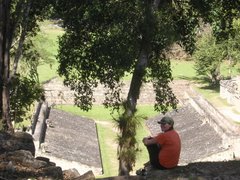
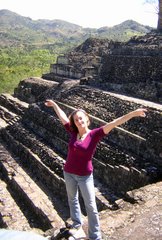
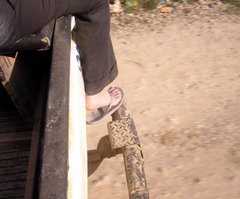
Piece #1: Danny visited me for the holy week of Easter and it was truly magical. We visited El Salvador on a class trip, the Maya site of Tikal on our own and Antigua for the Semana Santa processions, and I want to thank him publicly for such a beautiful and breathtaking week. Here is a photograph that encapsulates the feelings of the week: discovery, enchantment and tenderness. (The photo is from atop Maya ruins at Tikal overlooking Temple IV, which is peeking out of the forest canopy between our feet.)

Piece #2: When we crossed the border into El Salvador, I found the differences with Guatemala striking. Driving through the green countryside, I first noted the well paved and maintained roads. Plainly the Salvadoran government had at one time spent a good deal of effort and money to develop and maintain clear passageways through the country (more so than the Guatemalan government). However, alongside these well managed highways and underneath large billboard advertisements championing capitalistic ideals were shanty towns of poor squatter communities with nothing more than plastic, wood and garbage for homes. The dichotomy and allocation of resources was arresting. This contradiction sent a clear message: even today, the El Salvadorian government is more interested in being able to manage and oversee its people (through the use of well paved roads allowing easy travel and close tabs on all areas of the country) than to house or feed them.

It was especially intriguing to note the dissenter psyche of the people persevering in the capital city of San Salvador. When our class visited the National University, I was immediately aware of the explosive feel of the campus because of a strike between workers and professors. The campus was littered with trash (as a form of protest by the workers); there was a burnt and painted shell of a car denouncing a particular professor as the culprit for the demonstration, and graffiti was everywhere: on buildings, fountains, monuments and the ground. It seemed that graffiti was an accepted form of expression and forum of opposition. I thought how this sort of student reactionary behavior to an administrative dispute would never take place within the sterile and sheltered universities of the United States. It was fascinating to see the students actively oppose a bureaucratic issue. I noted that this unrest and suspicion of authority is what unites and, in part, defines the young generation of Salvadorians; and rightfully so - they grew up during a bloody and savage civil war.

With our ex-guerilla fighter and marxist professor, we visited the Museo de la Voz y la Imagen, which is dedicated to maintaining the history of the civil war (with no help from the government which has no museum or dedication to the war). Seeing photos of the horrifying massacre in the pueblo of El Mozote was intensely haunting and compelling. Among such disheartening images and histories, I was impressed by the way in which the museum director spoke about the events. She presented the exhibition and repeated one theme over and over: the importance of remembering what happened so that it would not happen again. This hopeful understanding of her purpose within the museum and her duty to the future and past generations of Salvadorians was commanding and I admired her sense of purpose.

What impressed me most was a F.M.L.N. (the political party created from the revolutionary efforts of the 80's) legislative tribunal in the central square of San Salvador. With the National Cathedral looking down upon us, senators from the F.M.L.N. party summarized the past week’s governmental activities and led an open discussion, fielding public commentaries. The hundreds of people who had gathered in the square listened to the demands, approvals, and criticisms of the government, (all made by fellow ordinary citizens) and either applauded or hissed as they saw fit. To me, this was the most impactful experience of El Salvador, because I have never seen any example of representative government truly this direct and from the heart of the people. The senators stood there and listened to the desires of the people they represent without censuring or reviewing what was being said, and truly connected as all of it was broadcasted live on the radio. My feelings were intensified by the nearby presence of the steps of the National Cathedral, where, not twenty years ago, unarmed members of the very same party, the F.M.L.N. were massacred by the government during a peaceful demonstration.

Our final day in El Salvador we rode in the back of a pickup truck and trudged on foot through the rough Guazapa hills to visit the base camp and strong hold for the revolutionaries during the war. As we passed over rotten and weathered old boots, tin cans, and bullet shells – remnants of the fight there – we were guided by an ex-guerilla fighter named Orlando. He cautioned us to stay on the trail, because landmines are still present. Seeing how the fighters lived for the years of the war made me realize just what exactly these men and women gave up to be there. And how much they believed in their fight against the government, in order to make those sacrifices.

Our professor had this to say about our experience, “What you saw was a great achievement for El Salvador: a lot of people died for you to be able to see that F.M.L.N. meeting. A lot blood, tears and sacrifice was given for that meeting to be there. El Salvador isn’t in heaven, but change has happened. Our guide, Orlando, only left the Guazapa Hills once during the 10 year war; once to fight in the capital of San Salvador. He spent his entire life fighting in Suchitoto; he sacrificed his youth. Before, in his time, you never would have been able to go the places you have been, and see the things you have seen, and this in itself is progress.”

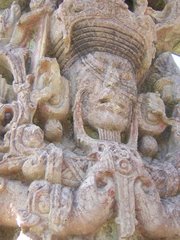
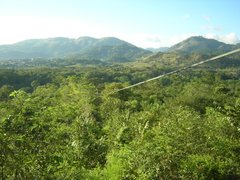
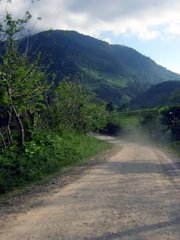
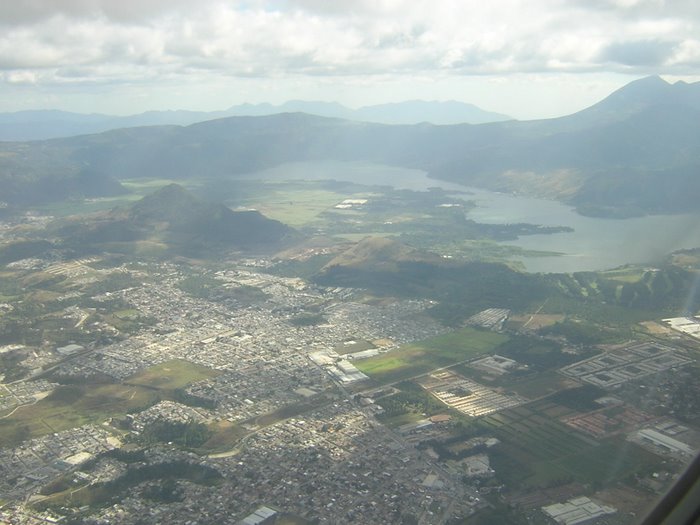
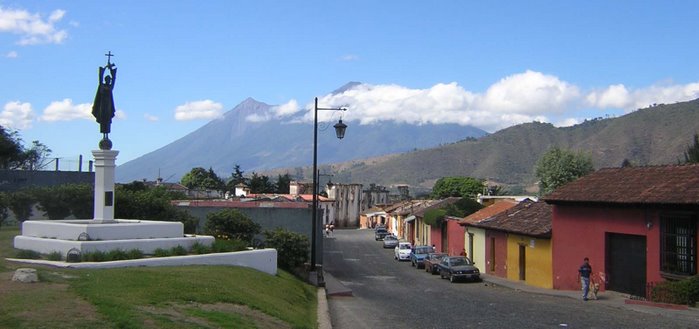
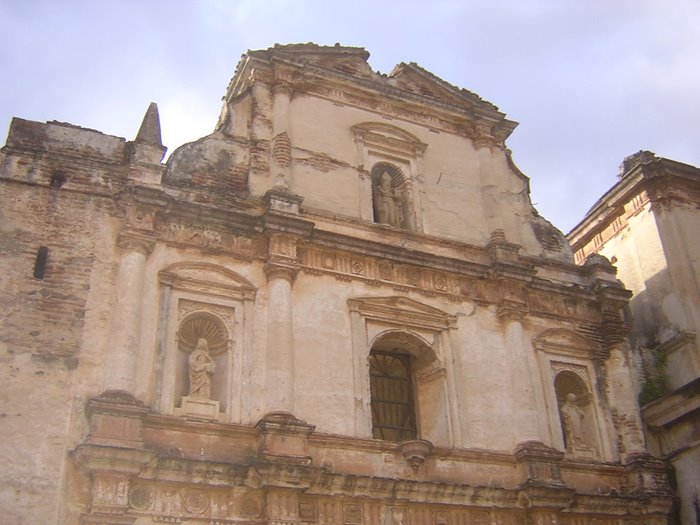
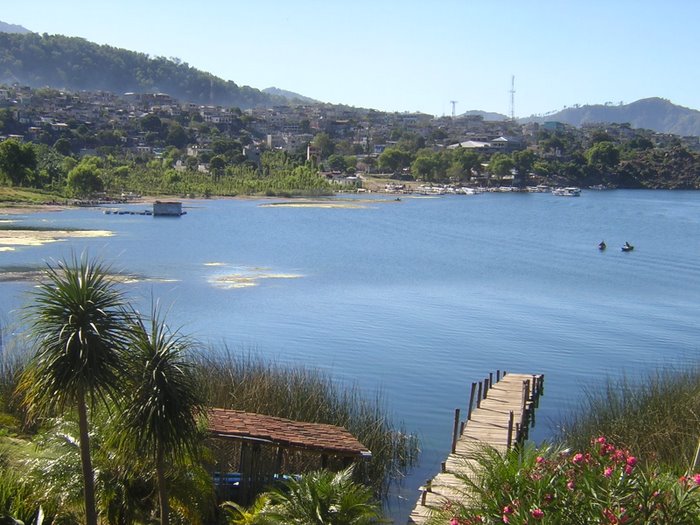
Piece #3: Last weekend’s travels included the Maya site of Iximche’ ruins and the second largest city in Guatemala; colonial Quetzaltenango. Photos do these experiences better justice:

What the World Wants Most

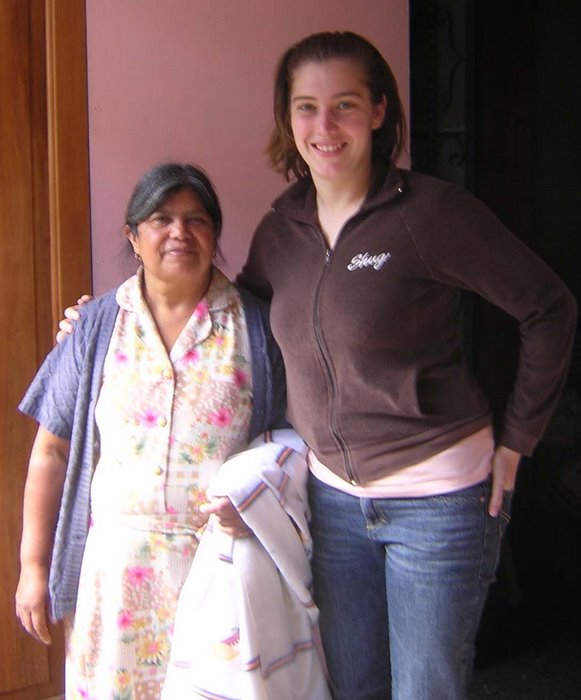
In the dining room of my home, with leftovers of dinner spread out over the flowered table cloth, laced doilies covering every visibly flat surface, and strange figurines peaking out from the silverware cabinet, Victoria and I sat talking about her childhood. Victoria told me that she was one of 12 children born to a very poor Guatemalan family. Her mother was always tired from working and her father was generally too drunk to have a steady job. She started working when she was seven years old, after only two years of school. In her home town of Quetzaltenango (very cold climate) she had slept on the ground with her brothers and sisters because the family didn’t own beds. She remembered receiving her first pair of shoes when she was 15 years old. She talked about not being educated and held up her calloused hands, saying that these were the reason that she was still alive. She has worked hard her entire life for the things she has. She looked around her dinning room, her kingdom, and added that she never would have dreamed that one day she would own a home. Not one like this.

Henry drove us through the foggy, curving hills surrounding Quetzaltenango and talked about how he had learned English, a story which I have heard over a dozen times. He worked in the U.S. for a couple of years doing “a little bit of everything.” He described this part of his life as terrible. Not because of living conditions (although they were pretty terrible too – sharing a single home with dozens of people, sleeping in shifts in order to save more money to send back home), but because he left his wife and 5 year old son behind. He said, “No one should have to live like that. Alone.” He told us that for the first two years he talked to his son on the phone every night; because he wanted his son to remember who he was. He was terrified of his son forgetting him. And his son was terrified of his father forgetting him – he would ask his father “Do you still love us Daddy? Do you have another wife there? Do you have other children?” This broke his heart. He said that most men do get remarried and start new families after two or more years, but he couldn’t do that to his family. So he came back. And now he is the center of his son’s universe. He said that his son never leaves his side. When I asked him where he would prefer to live, he said firmly, “With my family.” When I clarified and asked if he would prefer to live in the states or here in Guatemala, he thought for a second and then said: “In the U.S. you can work there for three months and save enough money to buy a car, but here you can work for 5 years and not make anything. Life is better there.”

I met my friend Vinicio through the magic of music. Every morning I woke up to reggaeton thumping through my bedroom wall and decided that I needed to meet the mystery neighbor behind the hip-hop beats. I was greeted by a genuine mustached smile, English gangster slang and South Side LA tattoos covering most of his body. As we swapped music, we swapped stories and I learned that he had been in jail for the past three years (his second time) and that he had been let out early. He told me his story with as much honesty and sincerity as one could imagine. He didn’t hide anything; the good or the bad. Vinicio was born in Guatemala, but moved to Los Angeles with his family when he was about five years old. He described himself as the black sheep of his family and said that he got involved with gangs when he was really young (his first time in jail was age 17). After he got out this second time, he knew that he could never really go back to L.A. because he would just be killed. One way or another, the gangs would suck him back in and he would end up dead. So without anything but the clothes on his back he took all of his money and bought a plane ticket to Guatemala. He talked about wanting to do better by his Lord and about how he loved his God and his Virgin Mary in a way that he just couldn’t understand when he was younger. He talked about wanting to turn it around and live right. Working two honest jobs here in Antigua and staying away from Guatemala City (where there is a twin gang for every gang in the U.S.) are his best bets at starting over. Vinicio talked about how hard life was in jail – “I learned respect in jail. You have to. Even something like moving the TV screen can get you stabbed if you don’t ask first. You have to respect everything and everyone or else you will end up dead.” And he described how hard it is adjusting to life outside of jail. Breaking habits like eating meals in silence and adjusting to sleeping in a room alone are the minor things. What is hardest for him is that he doesn’t really feel connected to anyone here. He is without any real friendship. His family back home doesn’t believe that he has started over (which he doesn’t blame them for, cause he hasn’t given them much to believe in), and his second family, his gang, the ones that he grew up with, the ones that would have died for him (and he clarified that no one ever wants to die, but you back your boys and fight for them) he must avoid and hide from. He is alone in a foreign homeland.

Everywhere that I have visited in the world, people are all saying the same thing: “We want a safe home, we want a loving family, we want true friends.”

Monday, March 19, 2007

Photo Recap of February and March

After four long weeks from my last entry, you can imagine how much has happened and how impossibly lengthy this entry would be if I summarized my experiences like I normally do. So instead of bombarding you with a short novel, I will give a photo recap of the past month, and you can see parts of it first hand:

My room. This is an important photo to show first because it is actually where I spent most of the past month. I’ve been sick for the past four weeks, longer than ever before in my life and I didn’t have the energy to keep up with the blogging (thus my hiatus). After two doctors, one radiologist, one wrong diagnosis and prescription, one CAT scan, one ear infection, one bout of pinkeye, and more sleepless nights than I care to count, I am glad to say that the bronchitis, allergies and nasal infection are starting to go away. I am more frustrated than anything else because I have spent three weekends idle and missed out on travel opportunities. However, as you will see, there was a ton to see and do in Antigua

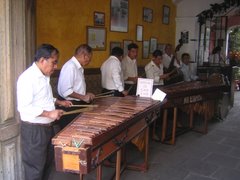
Mariachi’s at a CIRMA celebration to welcome the stolen baby Jesus back to the nativity scene. This is apparently a tradition all over Guatemala, and the party was complete with tamales, cake, spiked punch, DJ and water balloons. The most hilarious part was when the woman who stole the baby Jesus revealed she was the secret thief (after weeks of speculation by everyone). And in front of 50 or more people she tried to make a serious speech about the importance of the tradition, and one of the kids present (about 4 years old) walked out into the middle of the grass, pulled down his pants and started peeing. Everyone started dying laughing, and the woman’s built up moment of glory was gone.

The yellow house that Laura and Kendal are sitting in front of is my home in Antigua


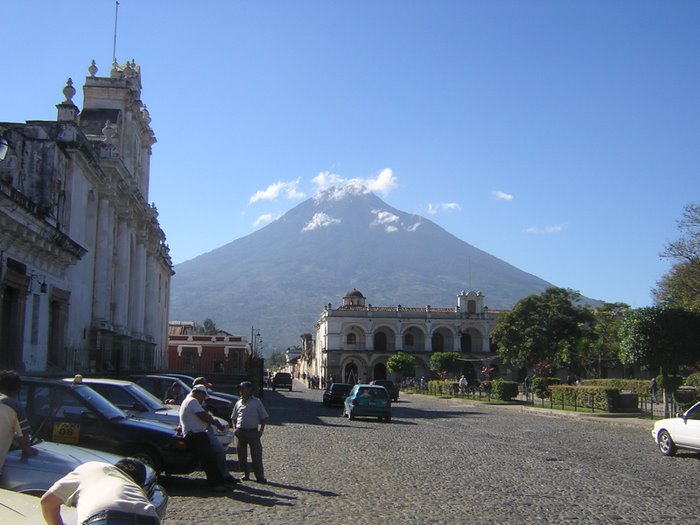
Check out the fireball in the sky next to the church. Behind those clouds is Volcano de Fuego which erupted the other night. You could see the lava and fire shooting out of the mouth from Antigua.


Dancer at cultural festival with beautiful smile.


Cultural dance festival on the steps of the Cathedral


That is a circus lion, leopard and jaguar being transported to the next fair grounds. It was raining and the lion was pacing back and forth while the truck blasted down the road at 70 MPH.


With my own kind. He wanted to play with my water bottle and was surprisingly strong. After interacting I’ve decided that I really want a tail. Really.


The beach front hotel we stayed at in Chiapas, Mexico a few weekends ago. The woman who owned it was beautiful and truly kindhearted. Her son was a watercolor artist with impressive work hanging up all throughout the great hall.


The beach in Playa Linda, Chiapas, Mexico.


This is the river that separates Guatemala from Mexico, and those are illegal immigrants walking across the filthy border water. They probably aim to make it the U.S. and they have quite a way to go. The border town of Guatemala was packed with young men preparing to make the jump. One young man who I can’t shake from my mind looked completely terrified and truly helpless as he paced nervously back and forth near a bus station.
In a non-Guatemalan accent he anxiously asked passerbyers for help and when he was given a half empty bottle of Gatorade he ferociously devoured it like he hadn’t had anything to drink in days. His fearful and lonely eyes were harrowing.

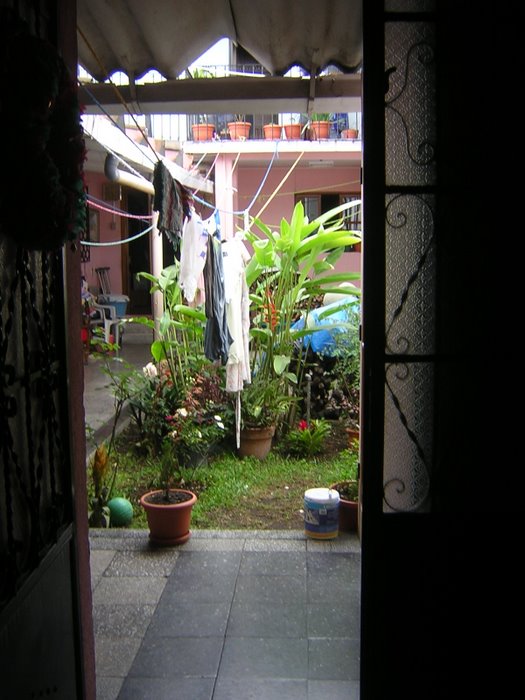
Laundry hanging in the garden at my home. In the background you can see the statue of Mary and Jesus with fruit and incense offerings.


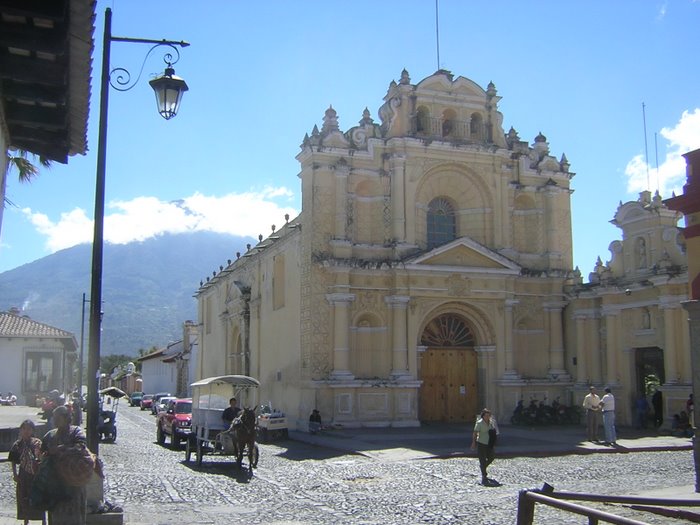
Calle Chipilapa with families out in front of their homes creating carpets from fruit, leaves, pine needles, and colored sawdust for the processional to walk over. The weeks leading up to Easter are a huge celebration with processions winding through Antigua every Saturday. My Spanish teacher expressed her love and pride of this time of year when she said, “Semana Santa is by far my favorite and the most important holiday for Antigua.”


Luis, the grandson of my host family in front of the alfombra or carpet which I was able to help create.


The procession passing by our house. The atmosphere of the crowd is comparable to a Fourth of July celebration in the states; complete with families, kids, vendors, sweets, balloons, popcorn and cotton candy.


My family: Luis (grandfather of little Luis), Victoria, and Maria Luisa, watching the festivities.


The processional bearers in costume.


The sheer mass of the processional is incredible. The men and women who carry it on their backs clench their teeth and fight to keep moving. Penitence doesn’t get more plain than carrying a thousand pound representation of your God on your back.


Cerro de la Cruz, on a hill over looking Antigua. Volcano de Agua in the background.


Just so you understand how big this cross is that is me at the base of the cross in the second picture.


Our second class trip to Maya ruins, this time in the capital city. The tin roofs to the bottom left are protecting the ruins, in the background the city. My fantastic archaeology professor Erick Ponciano is waving.


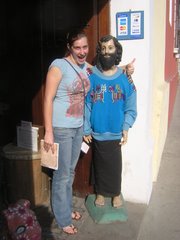
I’ve seriously thought about this tail thing. I want one. The beautiful painted Maya pottery in the Popul Vuh museum.


The sunrise by canoe at the wildlife preserve in Monterrico, Guatemala on the Pacific coast..


Marshlands


White cranes and the sunrise.


Waves from passing boat.


Reflection of sunrise...


Fishermen in the perserve getting food for the day.


Last weekend hanging out at the black sand beach. The water was warm and current crazy strong.


Monday, February 26, 2007

"I never let my schooling get in the way of my education" - Mark Twain


If my purpose for being here seems a little indistinct, it’s probably because I’ve yet to mention it at any good length. So let me clarify. I am here to learn. I am taking classes in the traditional form at CIRMA (Centro de Investigaciones Regionales de Mesoamerica), as well as absorbing the informal education that presents itself to all travelers. I am taking four official classes: History of Central America, Archaeology of the Maya, Literature of Central America, and Conversational Spanish. In addition, there is a colloquium series where some of Guatemalan’s finest and most distinguished minds speak to us (eight incredibly lucky students) about their areas of specialty. Outside of these classes, I have been taking private Spanish lessons twice a week with the daughter of my host family (she previously worked at one of the numerous language schools here in Antigua). Needless to say, with all of this packed into three school days (Tuesday through Thursday), and the traveling nearly every other weekend – I am busy. The free time I do have is spent at the gym at salsa-aerobics or writing and drawing.
Instead of outlining details of each class, I will give you excerpts worth repeating:
This past weekend our archaeology class went on a trip to Takalik Abaj, a Maya site from the Preclassic period in Southern Guatemala. Our professor, Dr. Erick Ponciano (an archaeologist who is leading a project in the Peten) and another archaeologist leading the Takalik project site explained the significance of the details, which made it much more worthwhile. We were allowed to go behind the scenes because of Erick’s ties to the archaeology community, and were able to watch the excavation of newly discovered pottery and hold a few pottery shards in my hands (over 2,500 years old!). (After this we made for a quick trip to the beaches of Chiapas, Mexico.)
In our first colloquium meeting, Tani Adams, the director of CIRMA and head of CIRMA’s latest social awareness project called “¿Porqué estamos como estamos?” (Why are we the way we are?), spoke with us on perception of classes in Guatemala. Tani is a perfect of example of what this project is dedicated to – showcasing the vast diversity of the Guatemalan population and shattering preconceived notions of what it means to be “Guatemalan.” She is a blue eyed light skinned, fifth generation descendant of German farming settlers to Guatemala, was born in Guatemala, speaks Spanish, English and German and has U.S. citizenship (her father is American). She is a Guatemalan through and through, the product of an interesting part of the country’s history, and yet wherever she goes people assume she is a tourist. She is accustomed to having to defend her nationality on a daily basis, because there is no place for her in the national psyche’s conception of identity. Instead the Guatemalan world is divided into only two types of people: Ladinos (non-indians) and Indians. The racism which created this subdivision is continued today in subtle and not so subtle ways (there are elite Castellan families that to this day maintain blood charts, “proving” that they are untainted by indigenous blood). She explained this history of polarized thinking by asking us to list perceptions of “civilized” versus “uncivilized” peoples. This is what we came up with (and let me preface this list by saying that discussing perceptions of racism or even reasons, isn’t the same thing as condoning or accepting it, on the contrary it is to better understand and self-reflect on personal short-comings in order to change perceptions):
Ladinos /Indians
Civilized /Backwardness
sophisticated /barbaric
educated /uneducated
industrious /lazy
rich /poor
clean /dirty – untouchable
healthy /sick
rapid /temporal
science /magic
logic /intuition
progress /stagnant – traditional
leader /follower
adult /child
male /female
citizen /subject
Culture* /culture*
*Culture with a capital C is used to signify “high culture” (ballet, symphony, opera, etc.), whereas culture with a small c is used to signify “low culture” (basket weaving, tortilla making, etc.); the “culture” that tourists come for. These perceptions of culture (little c) combined with the other elements on the list help to create a nostalgia and sense of loss for the “uncivilized other.” Tani formerly worked in D.C. as a lobbyist and said that the three issues which people responded to most (when fliers were sent out) were saving the whales, forests and “Indians.” Take a minute to think about the disparate lumping of these three things together. This sense of needing to “save the Indians” (who in reality have defended their own rights, passed revolutionary legislation in Guatemala allowing self-governance, and recently made huge political advances – Rigoberta Menchú, an indigenous woman, is running for president in this year’s upcoming election) is an idea created and perpetuated by the romanticizing of indigenous cultures. But in reality the profile or population that most needs help in Guatemala are young urban men with tattoos, because these men are the most likely to be discriminated, brought into the dark drug-world, and die early. But would people respond to a flyer asking for money to help this population? Probably not. It doesn’t fit within the prepackaged framework of who should be helped. This isn’t to say that discrimination of indigenous people and inequalities doesn’t exist, because they do (the changes recognized between the social imaginary and social consciousness are certainly different), but work combating racism is happening. Challenging people to think about race relations in these terms will hopefully reveal some uncomfortable truths and motivate changes. I am proud of the work CIRMA is doing.
Switching to my history class, Professor Jose Antonio who was a former guerilla fighter with the FMLN in El Salvador characterized the people’s reasons for the social revolutions of Central America in unforgettable way. Pacing in front of that class, speaking in first person, he takes on a persona and with an intensity glimmering in his eye he says: “I work hard. All week long and all day long I work hard. I work to feed my woman and the children. All week I work and at the end of the work day I need to have a few drinks to make the work disappear from my mind. So I drink and I drink. And when I start missing my wife, I go home to her.” At this point his voice gets dark and deep, flexing machismo in his voice, and he stops pacing, “And that stupid woman who has been doing nothing all day, nothing but staying at home with the children, she says she is tired and won’t come to bed with me… So I have to beat her.” He says this last point as though it is the only clear logical conclusion, and a chill runs up and down my spine. I begin to believe in the character that my professor has created (my professor who is infinitely sweet and righteous) and I am afraid of him, because I know that there are men who think like this all over the world and he convincingly portrays this man. I suddenly see the intensity that every ex-fighter holds within. He continues, “I have to beat her to show her that she will respect me. Because I am the one who provides for her and the children.” He bangs his fist on the table, “I am the one in charge of this house. I am the one who gives her money for food. I am the one who does everything. So I must beat that stupid woman to show her I am right.” Breaking out of character, he resumes his natural gentle manner and asks us, “And after night after night of this pattern, do you know what happens? It happens all the time. One night the woman waits quietly for her husband to go to sleep. And she sneaks into his bedroom and is very quite. She uses a knife from the kitchen and she slits his throat. She kills the man who beats and represses her.” He sits down, “This is the same with revolutions and dictatorial nations.” I understand his past history, and his countries rebellion against Romero. His characterization of subjugated citizens as the battered housewife and tyrannical governments as the abusive husband is both powerful and compelling. It speaks to the multiple levels of violence of these countries; the individual violence behind closed doors and the organized uprisings against cruel governments.
In my literature class I am reading “The Inhabited Woman,” by Gioconda Belli, which I suggest you read if you are at all interested in an honest portrayal of a woman’s emotional description of her world. It deals with the revolution in Nicaragua and her involvement in the movement. I wish I could write like her. I also read “One Day of Life” by Manlio Argueta, which is harrowing, but worth a read if you are interested in Central America.
Another speaker who came to our colloquium was Dr. Ricardo Stein, the brother of the Vice President of Guatemala who has a PhD. in Mathematics, works in politics and is quite possibly one of the most intelligent people I have ever met. He spoke with us about the 1996 Peace Accords that officially ended the war and established a new government in Guatemala. He was on the creation committee of the peace accords and discussed candidly the accomplishments and shortcomings of the document now that ten years have passed. The points that I took home from this living genius were his comments on corruption. He stated that corruption would not exist if it was not beneficial or functional to the system. He explained that corruption could be a positive an effective tool in the hands of the right people, or a destructive and regretful tool in the hands of the wrong people. He believes that true change comes from the individuals manning the institutions. I would have to agree.
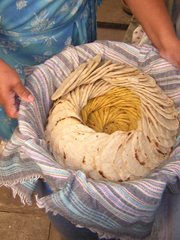
As far as things that I have learned outside of class, the list goes on and on. I’ve learned to love thick corn tortillas. I’ve learned that I will never be fluent in Spanish, but that I can keep working on becoming functional. I’ve learned that it is more expensive to wear traditional clothing for indigenous people than imported clothing. I’ve relearned that children are truly the best way to break the cold ice that adults enclose themselves in. I’ve learned to appreciate the platonic friendships allowed between men and women in the U.S. And in turn, I’ve learned to hold my tongue and practice patience when talking to machos (which doesn’t mean I don’t despise it). I’ve learned that family is the most important value everywhere. And that Quetzaltenango, Guatemala makes the best hot chocolate in the entire world.
Until next time, Bonnie